Periodontal surgery: restoring your gums is possible
Periodontal surgery is key to treating advanced gum disease. Find out when it is recommended and how it can help you restore your oral health.
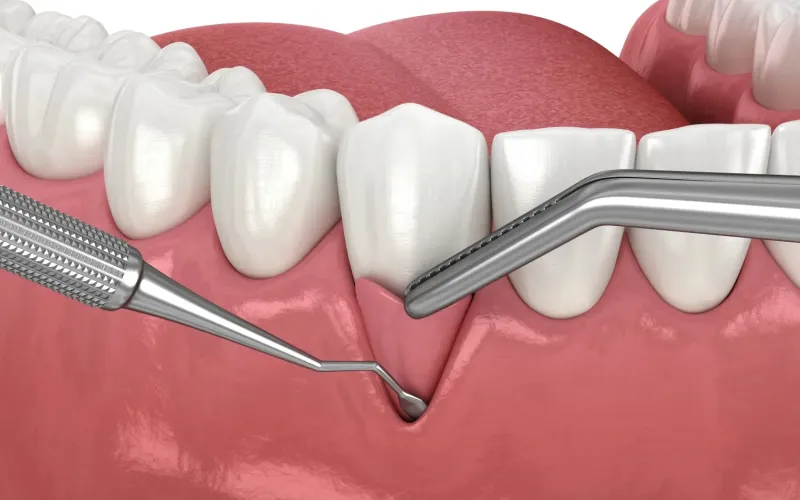
When we talk about oral health, we often think only about our teeth. However, gum health is just as important. When your gums become inflamed and recede, you may be developing gum disease, which, if not treated in time, could even lead to tooth loss.
In these cases, periodontal surgery becomes a key tool for saving teeth, restoring oral health and preventing more serious complications.
What does it involve?
It is a surgical procedure carried out to treat advanced problems in the gums and the bone that supports the teeth. Its main aim is to remove damaged tissue, reduce periodontal pockets (deep spaces between the tooth and the gum) and regenerate the structures that have been lost because of gum disease.
When is it recommended?
This type of surgery is recommended in cases of:
- Advanced periodontitis that does not respond to conventional treatments such as scaling and root planing.
- Receding gums that expose the roots of the teeth.
- Significant bone damage around the teeth.
- Preparation for restorative or cosmetic treatments.
Benefits of periodontal surgery
- Improves your overall oral health.
- Prevents bone loss.
- Eliminates gum inflammation and bleeding.
- Makes good oral hygiene easier.
Is it painful?
Although the word “surgery” may sound intimidating, the truth is that these procedures are carried out under local anaesthetic and, thanks to advances in minimally invasive techniques, they are very well tolerated. What’s more, recovery is usually quick and manageable with the right care.
Aftercare following periodontal surgery
- Avoid rinsing and spitting for the first 24 hours
- Apply a cold compress to the area at 10-minute intervals to reduce swelling
- Take the medication prescribed by your dentist
- Avoid hot or hard foods, or foods that can leave small bits behind (such as rice or nuts), for the first few days.
- Keep up good oral hygiene, following your dentist’s instructions.
- Avoid smoking and alcohol
- Don’t forget to attend your check-ups: they are essential for a good recovery
A step towards a healthier mouth
Periodontal surgery doesn’t just save teeth: it can improve your quality of life. If you have noticed frequent bleeding, receding gums or loose teeth, you may be dealing with a gum problem. Not every case requires surgery, but a timely assessment can prevent more serious complications.
Early detection and treatment are key to keeping a healthy, long-lasting smile.
Do your gums bleed, or have you noticed they have receded? You may still have time to prevent a bigger problem. Call us or book your appointment and we will answer your questions clearly and personally.