The 12 most frequently asked questions for the dentist
When should you go to the dentist? How should I brush my teeth? We answer these and other questions about your oral health.
What is a dental check-up for and how often should you have one?
A dental check-up consists of an intraoral examination of the teeth, gums and soft tissues (cheeks, lips and tongue) to identify and/or rule out oral health problems in good time. It is advisable to have a check-up at least once a year. When a patient has periodontal problems or is prone to tooth decay, it is advisable to have a check-up every 6 months.
What basic care is needed to keep your mouth healthy?
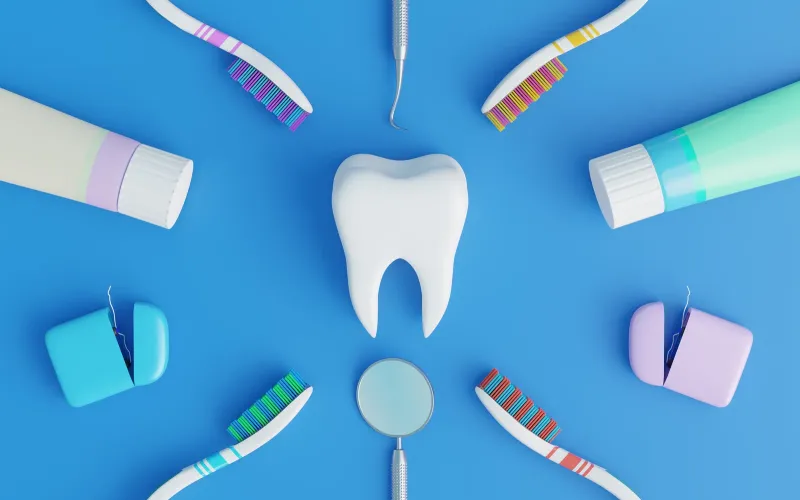
On the one hand, good dental hygiene: brushing your teeth at least twice a day for two minutes and using dental floss at least at the last brushing of the day, before going to bed. On the other, visiting the dentist regularly and going to the clinic if you notice any change in your mouth.
It is also important to eat a good diet and not to overdo sugary foods and drinks.
How many times and when should I brush my teeth?
We recommend brushing at least twice a day: in the morning and before going to sleep, and at least 30 minutes after eating so that your mouth can return to safe acidity levels. Brushing at night is crucial, as it reduces the build-up of plaque and bacteria that occurs during the day. In addition, using dental floss and mouthwash can significantly complement this routine.
Are all toothpastes the same?
Each toothpaste has particular ingredients and a specific purpose. So we find:
- Toothpastes designed to prevent tooth decay. They contain a high concentration of fluoride, which strengthens and remineralises the enamel.
- Toothpastes with antiseptic properties, recommended for cases of gum inflammation or receding gums.
- Toothpastes specifically for tooth sensitivity.
- Whitening toothpastes.
- Children’s toothpastes, which contain the amount of fluoride recommended for children.
What are mouthwashes for? And dental floss? Is it important to use them?
Mouthwashes or mouth rinses complement brushing; they should never replace it. They help to strengthen the enamel, reduce tooth sensitivity, eliminate bacteria and combat bad breath, as well as leaving your mouth feeling fresher.
Dental tape and dental floss help with interdental cleaning, as they reach where the toothbrush cannot. Using them removes dental plaque and the food debris left in the spaces between the teeth. They should be used at least once a day.
At what age is it recommended to visit the dentist?
It is recommended to visit the dentist for the first time when the first teeth start to come through, at around one year of age. This first visit is very useful as an introduction to the dentist and also to build trust, which helps to prevent future fears or anxieties. As for the orthodontist, it is recommended to visit before the child starts to replace their milk teeth with their permanent teeth, at around 5 years of age.
Can fear of the dentist be avoided?
Dental phobia, or fear of the dentist, is an irrational fear that some people experience at the dentist’s surgery. Trust in the dental clinic’s professionals, good communication with the patient and information about the characteristics of the treatment are factors that help to overcome this kind of fear. The dentist’s experience and the way they treat the patient are also factors that help to overcome these fears.
Is there any age limit for orthodontic treatment?
Orthodontics is not limited to children and teenagers. It can be fitted at any age to improve both the appearance and the function of the mouth, since as well as aligning the teeth it also improves the bite. This helps to avoid problems such as tooth wear, makes dental hygiene easier and reduces disorders of the jaw joint.
What is the most common oral disease?
Tooth decay is the most common dental disease, followed by periodontal diseases such as gingivitis or periodontitis. Tooth decay can appear at any age and is even common in children with milk teeth. However, these diseases are largely preventable. Good oral hygiene, a balanced diet and regular visits to the dentist are essential to prevent these conditions.
Why do I have bad breath? Can it be treated?
Halitosis, or bad breath, is associated with poor or ineffective oral hygiene. It is caused by a significant bacterial load lodged between the teeth and gums, or by a build-up of plaque and food debris between the teeth.
The best way to prevent it is to maintain good daily hygiene (without forgetting to brush your tongue too) and to have a deep professional clean at least once a year.
If I have pain in a tooth but it goes away soon after, should I go to the dentist?
Whenever you notice tooth pain, you should go to the dentist, even if it goes away quickly. It is usually a sign that something is happening, and the important thing is to find out whether it is something incidental or whether a condition is starting to develop: tooth decay, infection, a wisdom tooth coming through… For this reason, it is advisable to see a specialist and have an assessment as soon as possible.
Do wisdom teeth always need to be removed?
Removing wisdom teeth is indicated if they cause any kind of problem, pain or infection. It is also advisable to remove them when they grow incorrectly or there is not enough room for them and they affect the position of the other teeth.
Did you enjoy this article? If you would like to learn more about your oral health, we encourage you to read the following articles: