- Dentistry
- Implantology
- Orthodontics
- Paediatric dentistry
- Prostheses
- Dental implants
- Cosmetic dentistry
- Dental hygiene
Why do diagnoses sometimes differ?
Receiving different diagnoses can cause uncertainty and confusion. Am I being lied to? Who should I believe? Which diagnosis is the right one? Find out here!
When we see our patients at the clinic, we are often surprised to notice differences between previous diagnoses from other professionals and what we find during our assessment, especially where tooth decay is concerned. At Oralitá, we take the accuracy of our diagnoses very seriously, so we want to explain why these differences occur and how we make sure we give our patients a precise and accurate dental assessment.
The first thing to know is how to tell the diagnosis apart from the treatment:
- Diagnosis:
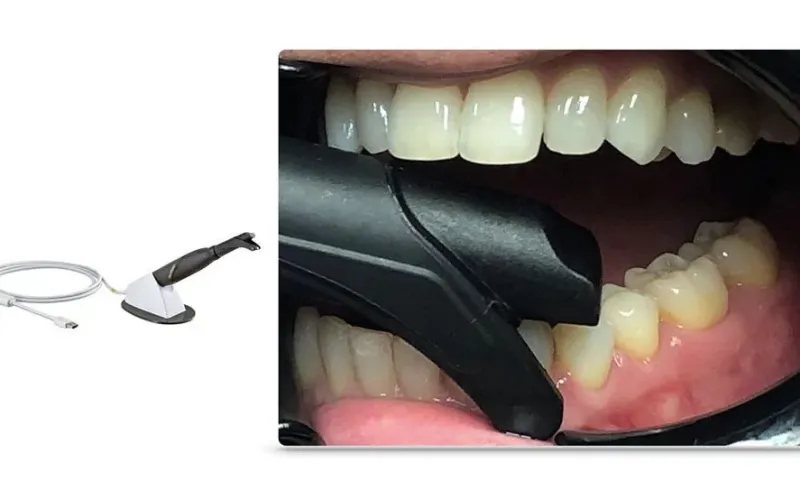
- Diagnosis refers to identifying a disease or medical condition and determining its nature. It involves assessing symptoms, clinical signs and medical tests using advanced technologies (3D imaging systems, X-rays, DiagnoCam, intraoral scanners, etc.) to reach a conclusion about a patient’s condition. Clearly, having state-of-the-art technology is crucial for detecting conditions early, in their initial stage.
- It is the essential first step in the healthcare process, as it provides the basis for developing a suitable treatment plan.
- Treatment:
- Treatment refers to the interventions and measures taken to address and manage a disease or medical condition once it has been diagnosed.
- It can include a variety of approaches and depends on many factors. (Our next post will talk about this, so don’t miss it.)
- The aim of treatment is to relieve symptoms, stop the disease from progressing, cure the disease if possible, or improve the patient’s quality of life.
In short, diagnosis is the process of identifying a disease or medical condition, while treatment is the action taken to address and manage that disease or condition once it has been identified.
To give a clear example: the number of cavities is not a matter of opinion. Cavities can be seen during an oral examination or detected using diagnostic tools. What can vary is each professional’s approach to treating them, especially when it comes to very small lesions. In these cases, you can choose to treat them straight away or to monitor them and keep them under control. Which option is chosen depends on each dentist’s clinical criteria and on the type of patient.
So there should be only one diagnosis; what can change is the type of treatment carried out to treat the condition detected.
What should you bear in mind to know whether a diagnosis is reliable?
- A correct diagnosis cannot be made without an orthopantomogram, that is, a panoramic X-ray showing an overall image of the upper jaw, the lower jaw and the teeth.
- An oral examination by the medical professional is crucial for assessing the general condition of the mouth. Taking the time to carry out a thorough assessment increases the chances of detecting even minor conditions that might go unnoticed during a superficial examination.
- In addition, in many cases, to detect decay between the teeth or under fillings that is not visible during the oral examination, it is necessary to rely on other diagnostic tools, such as:
- Intraoral, panoramic or periapical X-rays.
- Caries detection lasers (such as the DIAGNOdent laser): these devices emit laser light that can detect decay at very early stages, even before it is visible on an X-ray.
- Intraoral cameras: these high-resolution cameras can capture detailed images of the teeth and allow the dentist to visually examine areas where decay is suspected.
- Fluorescence tests: some devices use fluorescence to detect decay, showing affected areas with a different fluorescence from that of healthy tooth tissue.
- Communicating and explaining the diagnosis: the way a dentist communicates and explains the diagnosis to the patient can also influence how it is perceived.
- Advanced equipment: the more cutting-edge the technology used at the dental clinic or practice, the more likely it is that conditions can be detected at very early stages. This helps to prevent more serious complications in the future and, in many cases, to receive more timely and less invasive treatment.
In conclusion, if there is a discrepancy in a dental diagnosis, it is important to assess the type of visit and the tools used by the professional and, if in doubt, to ask for a third opinion.