Why do my gums hurt? Find out the causes and how to prevent it
Do you have pain or sensitivity in your gums? Click on the article and find out why. We also give you advice to stop them from hurting again.
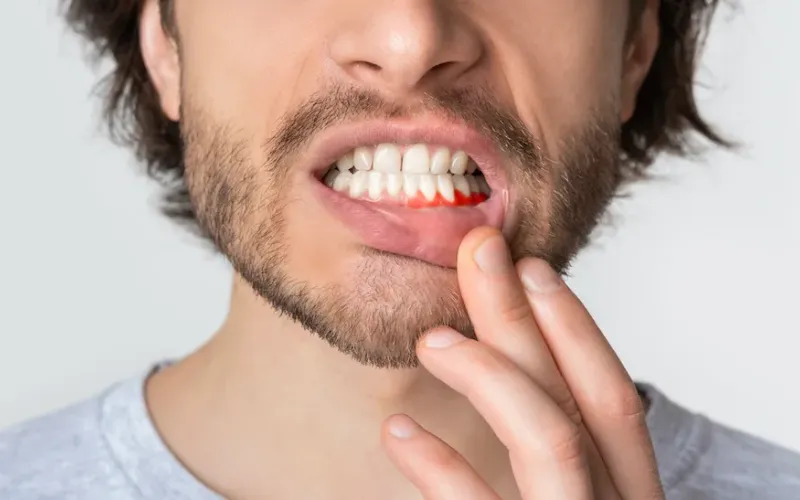
Gum pain is usually very uncomfortable and comes with inflammation or bleeding. Don’t be alarmed: it is a very common condition and is usually found in people between 30 and 50 years old.
At first, it usually appears as a mild, occasional pain caused by a small wound, but over time it can become persistent and develop into gum (periodontal) disease.
What are the main causes of gum pain?
To sum up, the most common causes of gum pain are periodontal diseases. These affect the gums and the structures that support the tooth, and they are caused by certain bacteria from dental plaque. These diseases have been classified as gingivitis, limited to the gums, and periodontitis, which extends to deeper tissues (Martínez, A. & Ruíz, E., 2005, pp. 147–156). Below we explain their characteristics:
Gingivitis
Gingivitis starts with a build-up of dental plaque. The symptoms you may notice are inflammation, redness or bleeding.
One of the main causes of gingivitis is poor oral hygiene.
Periodontitis
Periodontitis is the advanced stage of gingivitis. In this case, the accumulated bacteria damage the soft tissues and even the jawbone, putting at risk the hold of the teeth.
The symptoms of periodontitis are: bad breath, red and bleeding gums, inflammation of the gum area, very severe pain and even loose teeth.
The right treatment to stop gingivitis and prevent it from turning into periodontitis is a professional dental clean. This removes any plaque that has built up, and the inflammation in the gums gradually goes down until the gum pain ends.
Other causes of gum pain
Effect of teeth whitening
The products used for this type of treatment can cause tooth sensitivity, so you may feel pain in the area, especially when it comes into contact with cold or hot food or drinks.
Hormonal changes
Women with very marked hormonal changes (due to pregnancy, menstruation or the postpartum period) may suffer from gestational gingivitis.
After a dental implant is placed
After dental implant treatment, it is common to feel pain in the gums around the implant in the days following surgery.
Receding gums
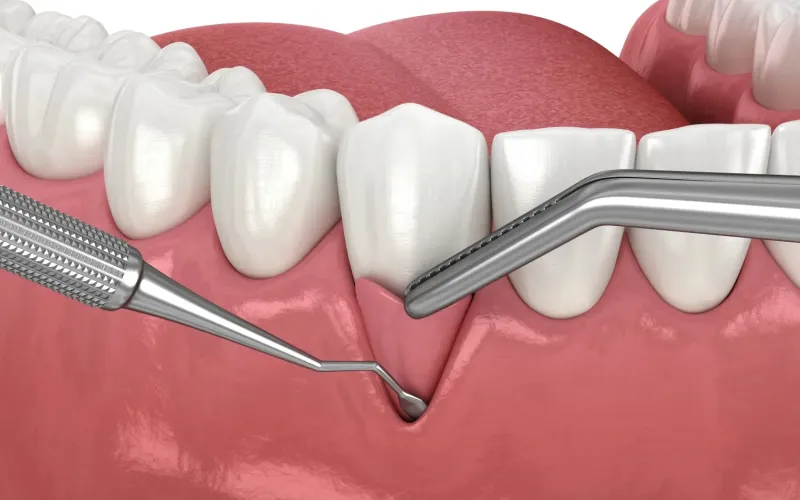
This can happen when you brush roughly and too hard. The gums recede and leave the root of the tooth exposed. This can cause pain related to the nerve being exposed to external stimuli.
Bruxism
People who suffer from bruxism involuntarily clench their chewing muscles, and this can cause frequent pain in the teeth and gums.
Wearing dentures
You need to keep up good hygiene regularly; otherwise, food debris will build up around the denture, which in turn causes inflammation due to tartar.
Wearing orthodontics
Orthodontic appliances, such as braces, can make cleaning your teeth more difficult. This encourages gingivitis to appear because of tartar build-up.
Misaligned teeth
When teeth are crowded or out of position, tartar is more likely to build up around them. If proper dental hygiene is not carried out, this will lead to gingivitis.
Other causes: tooth extractions, diabetes, anaemia, smoking or taking certain medicines.
How can you prevent gum pain?
To prevent future gum problems, at the Oralitá dental clinic we recommend the following:
- Brush properly and thoroughly 30 minutes after eating, and use a soft toothbrush that won’t damage your gums.
- Add dental floss to your oral hygiene routine. It helps remove the food debris that builds up between your teeth and in areas of the gum that the toothbrush usually can’t reach.
- We recommend avoiding tobacco and alcohol.
- Go to your yearly professional dental hygiene appointment.
Did you enjoy this article? If you’d like to learn more with us, we encourage you to click on the following articles:
- All the secrets of teeth whitening
- 10 facts about dental hygiene that will shock you