Mouth ulcers and sores: why do they appear and what should you do?
Do you often get ulcers or sores in your mouth? Find out why they appear and how to deal with them. Click here!
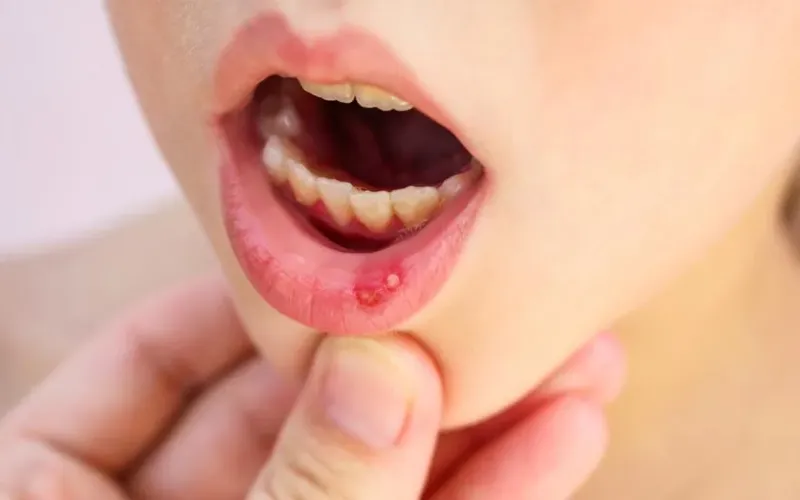
Dear reader, don’t be alarmed if you have developed a mouth sore: they are extremely common and are generally considered benign lesions. According to its Greek etymology, the word “aphtha” (the medical term for a mouth ulcer) means “burn”, and indeed one of its effects is to sting and hurt like a burn. Mouth ulcers are usually described as small ulcers that appear on the lining of the mouth. They are small in size, red at first and more whitish after a few days. These oral lesions usually disappear within a few weeks, so they are not normally a cause for great concern.
Why do mouth sores or ulcers appear?
The main cause is:
- Accidentally biting yourself or a tooth rubbing against the inside of your mouth. Sores can also appear after knocks, injuries caused by your toothbrush or poorly fitted prostheses.
Other causes:
- Changes in the immune system (food allergies, taking strong medicines such as antibiotics, etc)
- Consuming very hot substances, food with too much salt or harmful chemical agents.
- Hereditary factors
- Viral infections (herpes, HSV or neutropenia)
- Stress
- Hormonal changes (pregnancy or menstrual cycles)
- Nutritional deficiencies: low vitamin B12, iron-deficiency anaemia, vitamin C, etc.
How to treat mouth ulcers or sores
Generally, mouth sores do not need treatment and usually disappear on their own. Even so, special mouthwashes that help them heal can be useful.
Tips to prevent mouth sores or ulcers
- Avoid hot, overly salty or very spicy foods.
- Avoid citrus fruits.
- Brush your teeth gently, without touching the affected area
- Cut down on toxic substances such as tobacco or alcohol.
- Follow good oral hygiene habits.
- Protect your mouth if you wear dental appliances.
- Reduce stress: learn relaxation techniques
Tips and remedies to heal mouth sores or ulcers
- Apply ice, wrapped in something protective, to the inflamed area
- Rinse with cold salt water
- Use specific rinses or mouthwashes
- Herbal teas such as camomile help to reduce the pain