What is a dental rubber dam and what is it used for at the dentist?
Discover what a dental dam is and why your dentist should use it whenever you have a cavity treated or root canal treatment. Find out more!
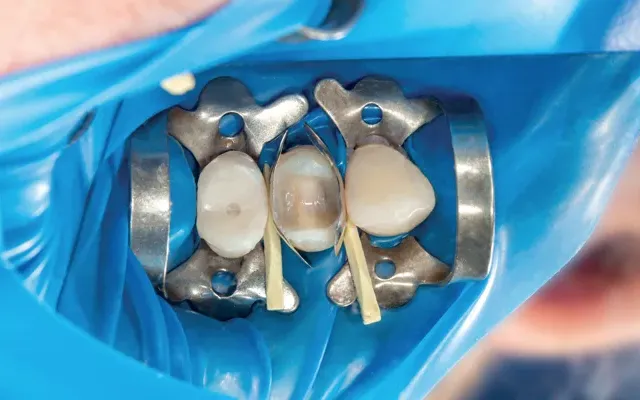
The rubber dam is a protective method that acts as a barrier to isolate the teeth. This way, when a treatment is carried out, whether a filling or root canal treatment, the area is completely isolated from everything else in the mouth during the procedure, such as the tongue or the lips.
This device is very easy to place and is a great ally for both the patient and the dentist.
When is the dam used?
This method is 100% mandatory in treatments such as root canal treatment, fillings and, above all, cosmetic treatments.
What are the advantages of using the dam?
Benefits for the patient
In general, the dam creates this isolation, which protects the patient and makes dental treatment more comfortable. Some examples are:
- The rubber dam acts as an effective physical protective barrier against infection being passed on.
- It prevents attack by bacteria and reduces the risk of infection.
- It protects the other teeth and the soft tissues of the patient’s mouth, which may be exposed to accidents (mechanical or chemical) or unexpected movements.
- Swallowing saliva is more comfortable.
- It gives the tongue greater freedom of movement.
- The isolating barrier stops water or any other liquid from falling into the patient’s mouth, reducing any choking sensation or unpleasant taste.
- It reduces the pressure of the saliva ejector.
- It prevents choking on small particles or instruments.
Benefits for the professional
- It keeps the area being treated clean and dry of saliva and other fluids.
- It retracts the soft tissues: tongue, cheeks and lips.
- Access is more comfortable for the professional.
- It gives a better view of the treatment area and of access to it.
- It helps the patient’s mouth stay open with less effort, thanks to the tension the dam provides.
- It significantly reduces bacterial contamination, which means restorative materials bond better to the tooth.
- The work is more efficient and saves time.
The rubber dam helps the dentist work with greater precision and achieve an excellent result. In many cases, fillings fall out because, when a rubber dam is not used, some fluids have come into contact with the tooth and affected the bonding of the filling.
The same happens with root canal treatment: if this rubber dam is not placed, the pulp chamber may not be properly disinfected, leading to infection problems in the short term.
In conclusion, using a rubber dam is essential for restorative treatments to be completely successful.
Did you enjoy this article? If you would like to learn more with us, we encourage you to click on the following articles:
- How long does orthodontic treatment (Invisalign) take?
- All the secrets of teeth whitening