Bruxism: night guard
Do you suffer from bruxism? It is very likely that you should wear a night guard while you sleep. Find out more!
If you notice that you clench your jaw muscles involuntarily, you are very probably suffering from bruxism. Bruxism is a habit of clenching or grinding the teeth, usually at night, which causes them to wear down.
Don’t worry: this disorder affects a large part of the adult population and it can be treated.
What is a night guard?
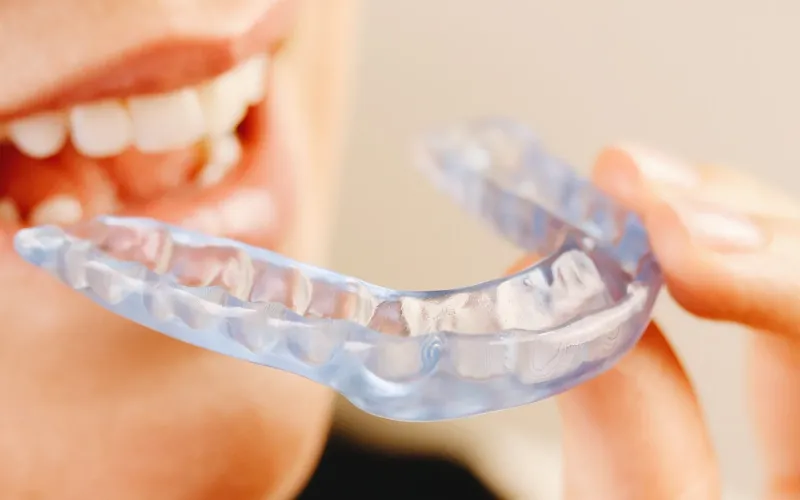
A night guard, also known as an occlusal splint, is a dental appliance made of clear resin that fits over the teeth of one dental arch. This type of splint is recommended for patients who suffer from bruxism.
This splint is usually about three millimetres thick and fits comfortably over the upper or lower arch. In this way, it stops the teeth from touching and, if you clench, it prevents the grinding mentioned above.
What is a night guard for?
The purpose of a night guard is to prevent the symptoms of bruxism and minimise its consequences. It is therefore not a way of eliminating bruxism, but of reducing its effects. The splint helps to reposition the jaw and relax the muscles we use to chew, which leads to a reduction in any discomfort or pain the patient may have. At the same time, it protects the teeth from the wear caused by bruxism, as well as from possible cracks or fractures. So wearing a night guard has many benefits: it prevents tooth wear, protects the jaw muscles and helps you sleep better.
How do you use a night guard?
This splint is normally recommended for use at night, as this is usually when the patient suffers most noticeably from bruxism. Even so, it can be worn during the day if the patient has daytime bruxism, provided that the specialist considers it appropriate.
When using a night guard, it is important to follow these steps:
- Place the splint over your teeth and press gently with your fingers to fit it, not with your teeth.
- Cleaning the splint: Using a brush, clean the splint with soap and water every day. It is important to keep it dry in its case, as bacteria grow in damp conditions.
- Looking after the splint: The splint should be checked at your dental visits, as over time it can lose its effectiveness and stop fitting properly.
If you are thinking of starting treatment with a night guard, we encourage you to click on the following articles: